India's diversity is most beautifully on display at its weddings. Having worked with brides from across the country — including South Indian brides marrying into Punjabi families in Delhi — I have a deep appreciation for the artistry behind both traditions. Here is a thoughtful breakdown of what makes each style distinctive, and how to blend them when needed.
North Indian Bridal Makeup
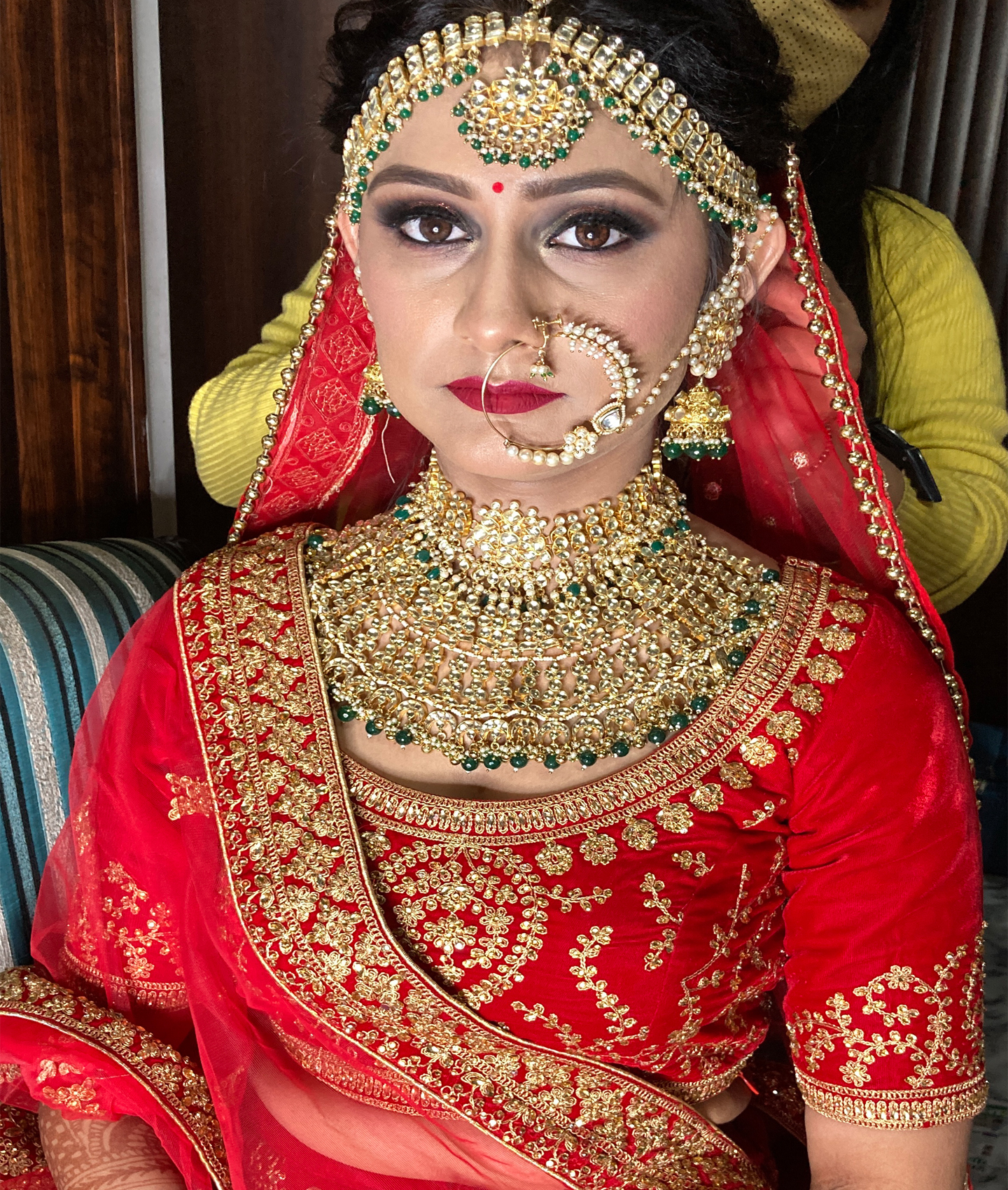
The classic North Indian bridal look — particularly prevalent in Punjab, Delhi, Rajasthan and UP — tends to be bold, layered, and richly coloured. Key characteristics include heavy contouring, strong eye definition with kajal and a winged liner, bold lip colours (deep reds, berries, and corals), and elaborate eyeshadow work that often extends to the crease and brow bone.
The base is typically full-coverage and matte to withstand long outdoor ceremonies and photograph cleanly in direct sunlight. Heavy jewellery and elaborate bridal lehengas mean the face needs to hold its own — hence the more defined, dramatic approach.
South Indian Bridal Makeup
South Indian bridal makeup — particularly Tamil, Kannada, Telugu, and Malayali traditions — tends to prioritise a more luminous, polished finish. The base is usually dewy or satin rather than matte, with an emphasis on glowing, healthy-looking skin. Eyes are defined but rarely overpowering — often featuring a clean kajal line and soft metallic or champagne shadow. Lips are typically a classic red, though this varies significantly by community.
Florals in the hair, gold temple jewellery, and silk sarees mean the face serves as an elegant complement rather than the focal point — beauty that reads as refined and curated rather than dramatic.
Blending Both for a Cross-Cultural Wedding
For brides navigating two traditions — like many of my clients in Delhi NCR — the key is to identify which ceremony calls for which look. A Punjabi roka or phera may call for the North Indian aesthetic, while a South Indian reception with family could favour a softer, more luminous finish.
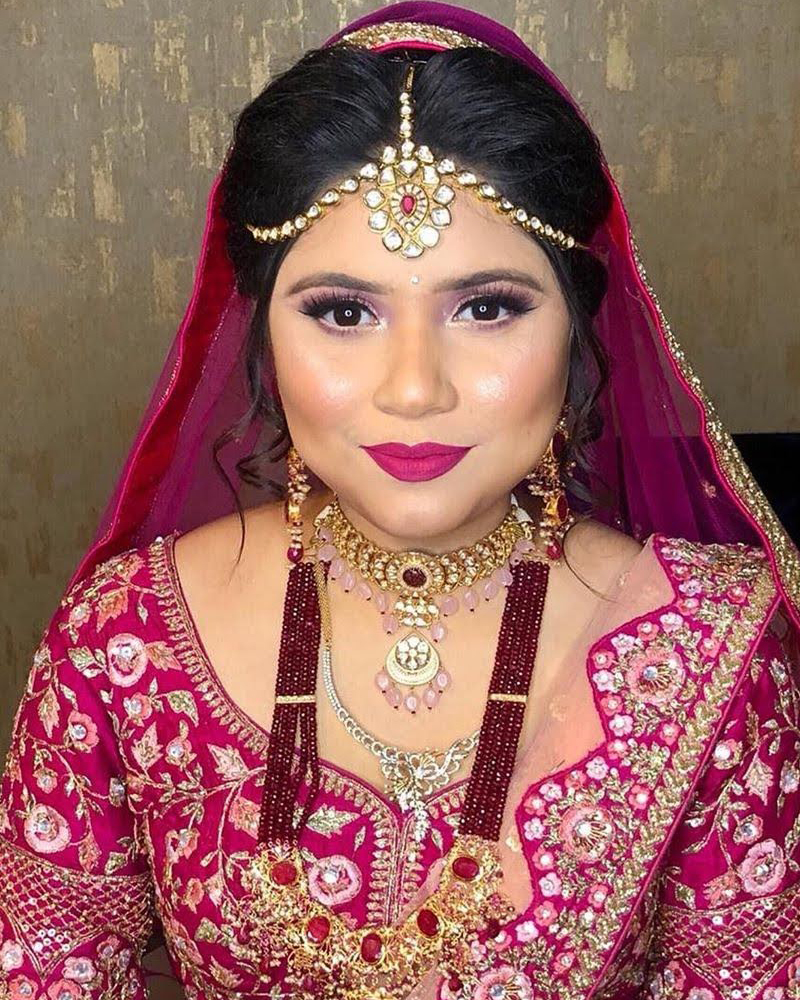
For clients who want one consistent look across ceremonies, I typically blend the best of both: luminous skin as the base (South Indian influence), a well-defined but not heavy eye, and a lip colour that bridges traditional red and modern wearability. The result is a look that feels elevated, personal, and culturally respectful.
The Role of Skin Tone
Both traditions have historically been designed for specific skin undertones. A good makeup artist adapts techniques and product choices to every complexion — not just defaulting to one palette. Whether you are fair, wheatish, or deeply pigmented, the goal is always enhancement, never alteration.
Working with brides across cultural backgrounds is something I am passionate about. If you are planning a wedding in Delhi or NCR and want to discuss a personalised look, get in touch here.